
我們昨天介紹了二元樹的結構、分類和走訪,今天要來看二元搜尋樹 !
二元搜尋樹(BST)就是有排序規則的二元樹,樹中的每個節點,左子樹的值都比他小或相等,右子樹的值都比他大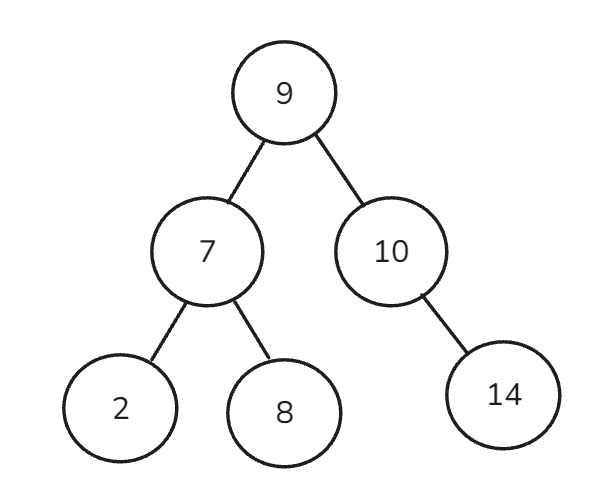
以節點 9 為例:左子樹(7、2、8)都比 9 小,右子樹(10、14)都比 9 大
這個規則不只對根節點成立,對樹裡的每一個節點都成立
例如 : 以 7 為根來看,它的左子樹 2 比 8 小,右子樹 10 比 14 大,同樣的規則套用在每一層
二元搜尋樹每次比較都能排除大約一半的剩餘節點,所以在尋找、插入、刪除資料可以節省很多時間
假設有以下資料:
2 7 8 9 10 14
如果用陣列儲存,要搜尋某個數字最壞情況要把每個數字都掃過一次 O(n)
但如果資料用 BST 儲存 :
假設要找 8 :
跟昨天的二元樹一樣:
struct TreeNode {
    int val;
    TreeNode* left;
    TreeNode* right;
    TreeNode(int x) {
        val = x;
        left = nullptr;
        right = nullptr;
    }
};
插入新值時,從根節點(root)開始比較:比新值大就往左走,比新值小就往右走,直到找到空位為止
#include<iostream>
using namespace std;
TreeNode* insert(TreeNode* node, int val) {
    if (node == nullptr) {
        return new TreeNode(val);   // 找到空位
    }
    if (val < node->val) {
        node->left = insert(node->left, val); // 比較小,往左子樹插入
    } else {
        node->right = insert(node->right, val);//比較大,往右子樹插入
    }
    return node;
}
完整程式碼 :
#include <iostream>
using namespace std;

struct TreeNode {
    int val;
    TreeNode* left;
    TreeNode* right;
    TreeNode(int x) {
        val = x;
        left = nullptr;
        right = nullptr;
    }
};

// 插入節點
TreeNode* insert(TreeNode* node, int val) {
    if (node == nullptr) {
        return new TreeNode(val); // 找到空位
    }
    if (val < node->val) {
        node->left = insert(node->left, val); // 比較小,往左子樹插入
    } else {
        node->right = insert(node->right, val); // 比較大,往右子樹插入
    }
    return node;
}

// 中序走訪
void inorder(TreeNode* node) {
    if (node == nullptr) return;
    inorder(node->left);
    cout << node->val << " ";
    inorder(node->right);
}

int main() {
    TreeNode* root = nullptr;
    root = insert(root, 9);
    root = insert(root, 7);
    root = insert(root, 10);
    root = insert(root, 2);
    root = insert(root, 8);
    root = insert(root, 14);

    inorder(root);
    cout << endl;

    return 0;
}
搜尋的概念跟插入很像,一樣是比較大小決定往左還是往右走:
bool search(TreeNode* node, int target) {
    if (node == nullptr) {
        return false;         // 走到底都沒找到,不存在
    }
    if (node->val == target) {
        return true;          // 找到了
    }
    if (target < node->val) {
        return search(node->left, target);   // 比較小,往左找
    } else {
        return search(node->right, target);  // 比較大,往右找
    }
}
完整程式碼 :
#include <iostream>
using namespace std;

struct TreeNode {
    int val;
    TreeNode* left;
    TreeNode* right;
    TreeNode(int x) {
        val = x;
        left = nullptr;
        right = nullptr;
    }
};

// 插入節點
TreeNode* insert(TreeNode* node, int val) {
    if (node == nullptr) {
        return new TreeNode(val); // 找到空位
    }
    if (val < node->val) {
        node->left = insert(node->left, val); // 比較小,往左子樹插入
    } else {
        node->right = insert(node->right, val); // 比較大,往右子樹插入
    }
    return node;
}

// 搜尋節點
bool search(TreeNode* node, int target) {
    if (node == nullptr) {
        return false;         // 走到底都沒找到,不存在
    }
    if (node->val == target) {
        return true;          // 找到了
    }
    if (target < node->val) {
        return search(node->left, target);   // 比較小,往左找
    } else {
        return search(node->right, target);  // 比較大,往右找
    }
}

// 中序走訪
void inorder(TreeNode* node) {
    if (node == nullptr) return;
    inorder(node->left);
    cout << node->val << " ";
    inorder(node->right);
}

int main() {
    TreeNode* root = nullptr;
    root = insert(root, 9);
    root = insert(root, 7);
    root = insert(root, 10);
    root = insert(root, 2);
    root = insert(root, 8);
    root = insert(root, 14);

    cout << "走訪結果: ";
    inorder(root);
    cout << endl;

    // test
    int target1 = 8;
    int target2 = 5;

    if (search(root, target1)) {
        cout << target1 << ": 找到" << endl;
    } else {
        cout << target1 << ": 沒找到" << endl;
    }

    if (search(root, target2)) {
        cout << target2 << ": 找到" << endl;
    } else {
        cout <<target2 << ": 沒找到" << endl;
    }

    return 0;
}
走訪結果: 2 7 8 9 10 14
8: 找到
5: 沒找到
假設樹的高度為 h:
| 操作 | 時間複雜度 |
|---|---|
| 搜尋 | O(h) |
| 插入 | O(h) |
如果照 9、7、10、2、8、14的順序插入,左右兩邊會比較平衡,高度會較低
(O(log n))
樹接近平衡:
如果資料排序後插入 2、7、8、9、10、14
會變成這樣
因為每個新值都比前一個大,全部都往右子樹插入
樹會退化成單向鏈結串列,高度為n-1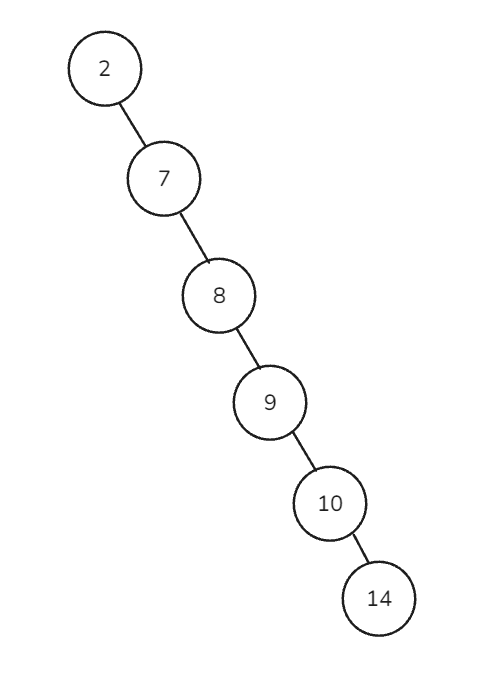
BST須滿足 左子樹 < 根節點 < 右子樹
平均情況下 BST 的插入、搜尋效率是 O(log n),比起一般二元樹(沒有排序,搜尋需要 O(n) 逐一比對)快很多
但這個優勢建立在樹的形狀平衡的前提上,如果插入順序恰好讓樹退化成鏈結串列,優勢就會消失
參考資料和書籍



 iThome鐵人賽
 看影片追技術